Use Code: YOGINI10 to get 10% on your first order

Why Hemp Needs Less Water
Understanding the Thirst Behind Our Clothes
9/2/20262 min read

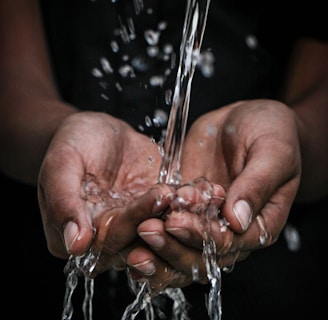
Every piece of clothing begins with water
We often think about the water we drink, the water we use at home, or the rain that falls from the sky. But there is another place where enormous amounts of water are used every day: our wardrobes.
Before a piece of clothing reaches you, its fibres have already had a long journey—and for many crops, that journey can involve significant amounts of water.
This is one of the reasons we love hemp.
🌱 Hemp starts with a remarkably resilient plant
Hemp is a hardy crop that can grow relatively quickly and adapt to a range of growing conditions. Once established, it can often rely substantially on rainfall, depending on the climate, soil and farming practices where it is grown.
This means hemp can be cultivated with comparatively little irrigation in suitable conditions.
But there is an important nuance: there is no single water requirement for hemp. Water use depends on where it is grown, rainfall, soil conditions, farming methods and the variety of hemp being cultivated.
So rather than saying “hemp needs no water,” we prefer to say something more meaningful:
Hemp can produce fibre with a relatively low irrigation requirement in the right conditions.
💧 Why does water matter?
Growing fibre is only one part of fashion's environmental footprint, but it is an important one.
Freshwater is a finite resource. Agriculture accounts for a significant share of global freshwater withdrawals, and growing demand for crops, changing rainfall patterns and climate change are putting increasing pressure on water resources in many parts of the world.
When we choose a fibre, we're therefore also choosing something about how our clothes begin their journey.
And that makes the humble hemp plant rather interesting.
🌾 Hemp vs. thirsty crops
Cotton is one of the world's most important natural fibres and has been used in clothing for thousands of years. But conventional cotton cultivation can require substantial irrigation, particularly in water-stressed regions.
Hemp, on the other hand, is generally considered a relatively water-efficient crop and can often be grown without extensive irrigation where growing conditions are favourable.
This doesn't mean that all hemp is automatically better than all cotton.
The environmental impact of a fibre depends on much more than the crop itself—where it is grown, how it is farmed, how the fibre is processed, how the fabric is dyed, how far it travels and how long the finished garment is used all matter.
But when we look at the beginning of the journey, hemp gives us an exciting alternative.
🌿 A plant that doesn't ask for too much
There is something beautifully simple about hemp.
It grows tall and quickly.
It produces useful fibre from its stalk.
It can thrive in a variety of environments.
And in suitable climates, it can grow with relatively little additional irrigation.
That combination makes it an intriguing crop for a world where water is becoming an increasingly precious resource.
From a drop of water to a thread of fabric
Think about the journey:
Rain → Seed → Plant → Fibre → Yarn → Fabric → Clothing
Every garment has a story that begins long before it reaches a hanger.
At The Yogini Edit, we want to understand that story. We choose hemp because we believe the future of clothing should look beyond how something feels or looks—and consider where it comes from, how it is made, and what it leaves behind.
Hemp isn't a perfect answer to fashion's environmental challenges. But perhaps we don't need perfect answers.
Perhaps we simply need better ones.
A little less water.
A little more intention.
A wardrobe a little closer to nature.
That is the journey we're exploring with hemp!
Follow our journey
Conscious clothing and lifestyle brand in India offering cotton and hemp apparel for men and women.
Contact
hello@theyoginiedit.com
© 2026. All rights reserved.